

Applications are now open for Columbia Law School's Human Rights Institute 1L Advocates Program (1LAP) for the 2026–2027 academic year. This unique opportunity is open to all incoming 1L students with an interest in human rights.
Learn more about the program below, and submit your application by June 30, 2026. The application form is available here.
About the Program
The 1L Advocates Program (1LAP), unique to Columbia Law School, is a flagship initiative of the Human Rights Institute (HRI) and the student-led Columbia Law Students Human Rights Association. Founded in 2017, 1LAP supports incoming first-year J.D. students with a strong interest in human rights through a structured, community-driven experience designed to jumpstart long-term engagement with or careers in human rights law.
Selected Fellows in the program will receive:
Professional Guidance and Community: Informal coffee-hour conversations with Columbia Law faculty, practitioners, alumni, and upper-year students focused on sharing advice, building connections, and helping students navigate the search for summer internships and opportunities.
Specialized human rights seminars: Bi-monthly sessions with leading advocates and academics, covering key issues in human rights, including law, institutions, advocacy strategies, and critiques.
Hands-on human rights work: Opportunities to do real human rights work, including with NGOs and the United Nations.
Site visit: Trip to NYC-based human rights organization to learn directly from professionals in the field.
The program is designed for 1Ls, to set them up for success in human rights through their JD and postgraduation. Many 1LAP graduates have earned fellowships and launched careers in public interest law, international institutions, and advocacy organizations.
The program fosters inclusivity and community, and prior experience is not required. We strongly encourage applications from students of all backgrounds and levels of experience.
**************
How to Apply
Participation is by competitive application. The application is open to all incoming Columbia 1Ls. You may apply to both this program and others (e.g., the Max Berger ’71 Public Interest/Public Service Fellows Program); selection processes are independent.
Applications will be open until June 30, 2026, 12:00 AM EDT and you will be notified about the status of your application by July 18, 2026.
**********************
1LAP 2025-2026 COHORT
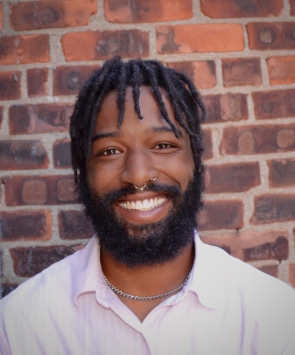
Steven Gray
Steven Gray (They/He) is dedicated to advancing the human rights and self-determination of people impacted by systemic violence. They have organized community members, allies, and elected officials to support the movement to end the war on drugs and mass incarceration, and have built campaigns advocating for policies rooted in public health and humanity, not criminalization. At Columbia Law School, Steven aims to sharpen their legal skills to continue elevating the leadership of people who use/d drugs, and work to end the drug war, at home and abroad. Steven holds a Bachelor’s degree in Psychology with a concentration in Health, and minors in Public Policy and Sociology from CUNY Hunter College.
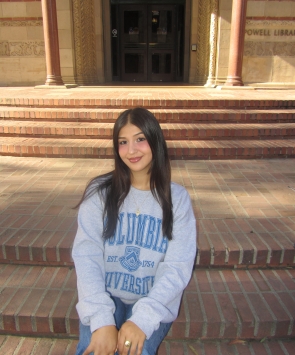
Suzy Kadir
My name is Suzy Kadir, and I am ecstatic to be part of the 1L Advocates Program for the 2025-2026 academic year. In 2023, I completed my undergraduate education at UCLA with Bachelor Degree’s in Political Science and Psychology, as well as having studied a minor in Environmental Systems & Society. At Columbia Law School, I hope to further my passion for human rights and environmental justice, and feel that the 1LAP program will be the perfect way to do so.
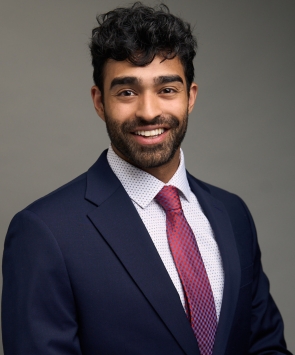
ZeSean Ali
ZeSean ’28 has coordinated humanitarian aid with the UN in Israel/Palestine and taught Conflict Resolution in a Divided World to undergraduates at Harvard. An Oregonian, he earned a B.A. in Chemistry from Reed College and an M.T.S. in Politics, Ethics, and Religion from Harvard Divinity School. His interests include human rights, negotiation, philosophy, policy, technology, and religion.
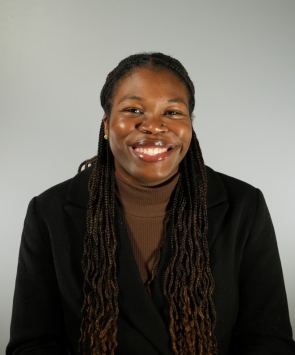
Omorinsola Tinubu
I am from Silver Spring, Maryland. I am interested in addressing human rights violations in Africa, specifically war crimes and gender and ethnic violence. While at Columbia, I hope to examine what legal interventions can be used to disrupt oppressive practices that exist within cultural traditions without harming the meaningful aspects of a given culture or imposing Western values.
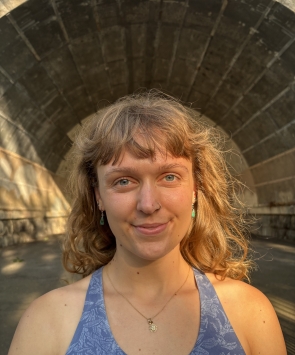
Oona Dederer
Oona Dederer graduated from Columbia in 2023 with a BA in human rights and anthropology. Her work experience includes abolitionist and prisoners’ rights projects, civil rights litigation, and immigrant post-conviction relief. She hopes to continue contributing to systemic legal, political, and social re-imagination.
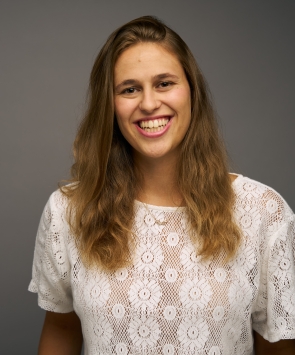
Charlotte Birsh
I am a French-American dual citizen who speaks English, French, Spanish, and intermediate Arabic. My relevant background includes internships at the U.S. Senate Foreign Relations Committee in D.C. and the U.N. Refugee Agency (UNHCR) in Geneva, as well as an immigration paralegal position at the New York Legal Assistance Group. Fieldwork-wise, I have volunteered with refugees in Greece, served as an advocate and interpreter for asylum-seekers in New York, and worked as a firefighter/EMT. While my human rights interests are currently wide-ranging, I am excited to explore and commit to specific issues through the 1L Advocates Program alongside my broader Columbia Law experience!
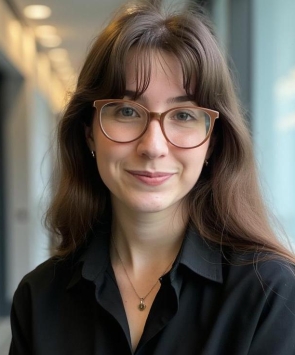
Summer Heidish
I grew up in Florida and am a graduate of Swarthmore College. My professional interests include human rights work that integrates behavioral science-informed approaches to peace building into transitional justice and other forms of humanitarian engagement.
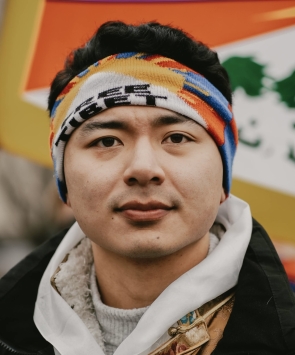
Topjor Tsultrim
After graduating from Williams College in 2022 with a B.A. in English and Political Economy, Topjor Tsultrim served as the Communications Director at Students for a Free Tibet, where he led United Nations advocacy and media strategy. A native of Queens, New York, his perspectives on China's colonial occupation of Tibet, transnational repression, and grassroots activism have been featured in The Washington Post, Le Monde, and other international outlets
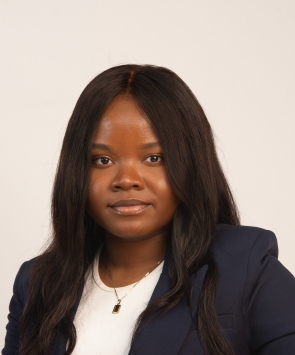
Folakemi Akinola
Folakemi hails from Ibadan, Nigeria. She earned her BAs in International Affairs and French from the University of Georgia, and a MPhil in International Development from the University of Cambridge. Before coming to Columbia Law School, Folakemi managed and developed new business for international development and humanitarian programmes in Africa. She has also lent her research skills to human rights projects at Human Rights Watch and the Cambridge University Digital Verification Corps, among others. Folakemi is most interested in human rights-centered socioeconomic development, justice during/post conflict and women’s rights.

Naya Welcher
Naya Welcher ’28, graduated summa cum laude and Phi Beta Kappa from Spelman College
in 2025 with a Bachelor of Science in Mathematics. She is a leader dedicated to examining the
relationship between incarceration and financial status, both as a cause and outcome of the
disproportionate imprisonment of Black individuals. As she begins law school, she hopes to
continue expanding her knowledge to serve communities that currently lack choice.
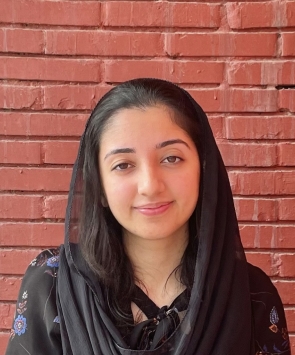
Duaa e Zahra Shah
Duaa e Zahra Shah is pursuing a JD at Columbia University, where she also earned an MS in Journalism, and has a BS in Economics from the National University of Sciences and Technology. She has worked with organizations including Amnesty International, the Talloires Network, Pakistan’s Ministry of Human Rights, and Gallup, focusing on human rights in the context of conflict zones, gender justice, and child wellbeing. She hopes to continue contributing to these areas through legal advocacy and journalism.
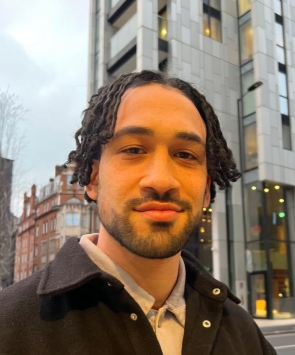
Charles Aprile
Charles Aprile has worked for trade unions in London and New York organizing immigrant service workers for better wages and conditions. He received his BA in Urban Studies at Swarthmore College and his MSc in Labour and Development Studies at SOAS, University of London. He is interested using the law as a tool to build leverage for low-wage workers in place-based industries and across global supply chains.
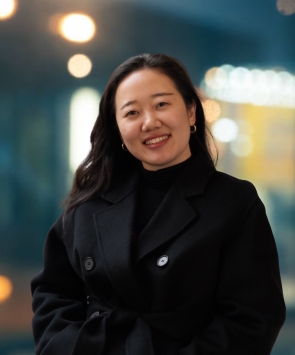
Christine J Lee
Christine J Lee is the proud daughter of Korean immigrants. Having graduated from Brown University with a Bachelor of Arts in History, she worked as a corporate paralegal in NYC before moving to South Korea as a Fulbright English Teaching Assistant. Multilingual and well-versed in various professional fields, Christine intends to pursue her intersectional interest in education, displacement, technology, and free press to contribute to the building of a more equitable domestic and global society.
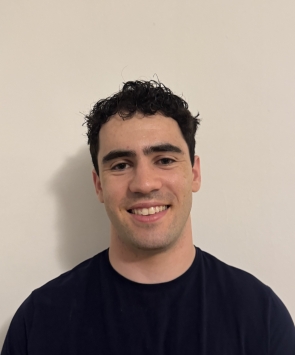
Jonah Berger
Growing up in the former industrial powerhouse of Pittsburgh, I developed an interest in labor rights from a young age. After completing a dissertation on the history of U.S. child labor, I worked for Massachusetts’ Fair Labor Division, helping to protect employees from exploitation.
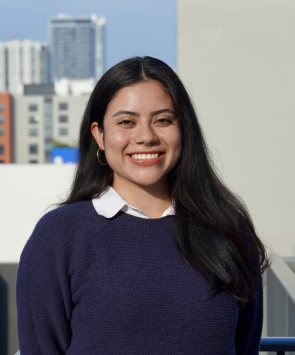
Katherine Almendarez
Katherine Almendarez (she/they) is a Honduran asylee, advocate, and future attorney. At Columbia, she hopes to focus on criminal and immigration law, particularly to uphold due process in immigration courtrooms and advocate for the decarceration of the asylum process in the United States. Katherine loves playing sports and building a loving and nurturing community with friend
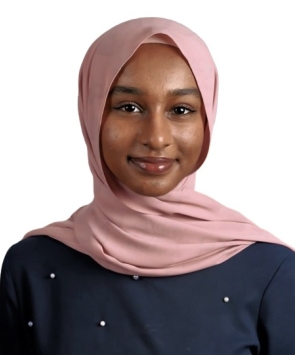
Reem Ali
I am an incoming 1L at the law school based in the DC area and originally from Sudan. I graduated from Harvard with a degree in Government and CS in 2023, and took two gap years, spending my time doing a research fellowship on Sudan in Doha for a semester, consulting full-time in DC for a year and a half, and co-running Nas Al Sudan, an organization focused on advocacy and resource access for those impacted by the current war in Sudan. I’m excited to spend this next chapter at CLS, and have specific interests in the fields of public international, human rights, and civil rights law. Outside of academics, I also do spoken word, and enjoy volleyball, cooking, reading, and exploring new cities.
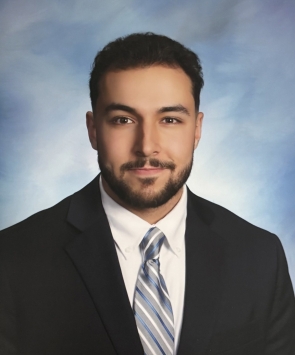
Zaid Sahawneh
Zaid Sahawneh is a 1L at Columbia Law School. He is a first-generation Jordanian-American from Poughkeepsie, New York. Sahawneh completed his undergraduate studies at Columbia with Departmental Honors in Political Science and a minor in Human Rights. Sahawneh is fluent in Arabic and learns Spanish and Greek in his free time.
Ramya Chilappa
I am a 1L at Columbia Law School passionate about economic justice, which I believe inextricable in nature from racial and migrant justice; over the years, my academic and professional experiences have solidified my aspirations to work towards these ideals within the legal field. I graduated from Dartmouth College in 2023 with a degree in Sociology and Public Policy, and spent my years post-grad doing social advocacy and grassroots service work in New York City. While I have spent a lot of time exploring human rights issues at the local, state, and federal levels in the US, through the 1L Advocates Program I hope to expand my knowledge and experiences within the realms of international and global human rights, and how they interact with, impact, and are impacted by the ongoing domestic issues we face here.
Current Student Leadership:
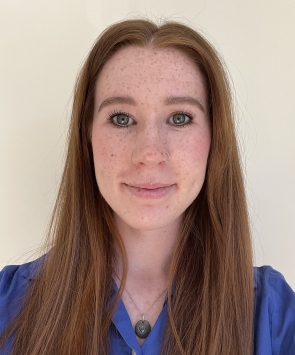
Annie McGovern
Home Country: United States of America
What motivated your decision to join the 1L Advocates Program at Columbia Law School?
I applied to law school with the intention of pursuing a career in human rights advocacy, so I was thrilled to be accepted into the 1LAP. The program offers students the unique opportunity to partake in humans rights curriculum immediately upon entering law school. I am extremely passionate about this work and eager to take advantage of any opportunity to engage in it. The 1LAP also boasts an impressive network of accomplished students, faculty, and professionals, all of whom I am excited to work alongside and learn from.
What human rights issues do you care about? What work have you done before coming to Columbia?
Given the intersectionality of all issues pertaining to human rights, I often find it difficult to narrow down my interests, but I typically gravitate towards projects that advance gender and racial equity in both the US and abroad. I was first introduced to the realm of international human rights when researching the Nagorno Karabakh conflict under the supervision of the University Network for Human Rights. My team traveled to Armenia to conduct a fact-finding mission and released a report outlining the ongoing abuses. Prior to this project, I advocated for Reproductive Justice by volunteering as an abortion doula, a sexual educator for high-schoolers, and as an intern with NARAL Pro-Choice. I also worked as a Domestic Violence Advocate in New York where I helped survivors access safe housing, governmental benefits, counseling, and other basic necessities in a trauma-informed manner.
What do you hope to do when you graduate from Columbia?
I envision myself traveling to sites of conflicts that receive less international media attention to learn about the needs of the community from those who are directly affected. I then hope to use people’s stories, with their consent, to create informative reports that spread awareness and hold leaders accountable for protecting their citizens. I also intend to take advantage of the United States’ privileged position on the world stage by garnering grassroots support across our country and placing further pressure on those in power. At a more general level, I picture a career in which I can combine my love for interpersonal connection and desire to help others with my interest in history, policy, and law. I hope to fulfill my dream of working at a non-profit, NGO, or governmental department that specifically serves the needs of women and children around the world.
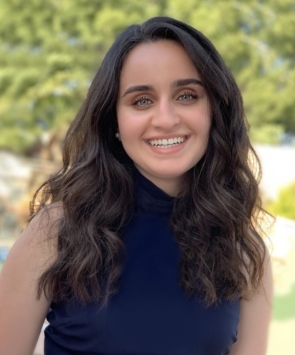
Renata Shammo
Home Country: United States of America
What motivated your decision to join the 1L Advocates Program at Columbia Law School?
I plan to pursue a career in international human rights law and spent my time as an undergraduate exploring different pathways to engage in human rights work. This exploration process was helpful but largely self-guided. I believe that the guidance the 1L Advocates Program provides will significantly broaden my awareness of the ways through which I can pursue human rights advocacy, thereby enabling me to make better informed career decisions. I also look forward to gaining human rights work experience through 1LAP, immersing myself in expert discourse about emerging human rights issues, and engaging in Columbia and broader New York’s vibrant human rights community as early as 1L year.
What human rights issues do you care about? What work have you done before coming to Columbia?
I have a strong interest in the rights of women in the Middle East, particularly the right to quality education. During university, I undertook a variety of public interest roles, including those in political campaigns, NGOs, and public interest law firms, and I experimented with researching, writing about, and disseminating information regarding human rights issues. Upon graduation, I moved to Japan and spent two years teaching English at elementary and junior high schools in Oita prefecture.
What do you hope to do when you graduate from Columbia?
I hope to dedicate my career to protecting civil liberties and increasing access to quality education around the world. I plan to use opportunities like 1LAP to better determine how I can best promote these causes, whether that be as a lawyer at a law firm, an NGO, or the government.
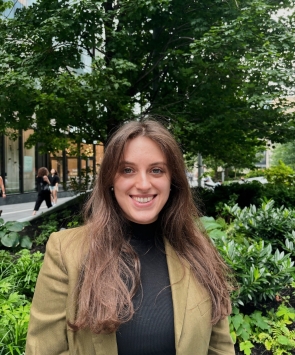
Paola Ripoll Nuño
Home Country: United States of America
What motivated your decision to join the 1L Advocates Program at Columbia Law School?
I’m fortunate to start law school with extensive experience in human rights work, both within traditional legal settings and also entirely outside of the legal field. I’ve fallen into these experiences quite serendipitously, however, and I still feel that I have a murky understanding of how exactly to mold them into a viable career. Compared to other legal practice areas, human rights law is rather niche and non-traditional, and while I find the varied career paths of human rights attorneys exciting and promising, entering this field is also a daunting undertaking, especially as a first generation student. I was drawn to the 1L Advocates Program for the practical resources and training, as well as the access to peers and mentors with similar aspirations, that it provides right from the beginning of one’s time at Columbia Law.
What human rights issues do you care about? What work have you done before coming to Columbia?
As an undergraduate, I studied and worked abroad extensively, wrote two theses that focused on state-building and social movements in Latin America, and assisted with an internal investigation at the United Nations, experiences that oriented me to think about how we can ensure that international humanitarian work actually carries out its intended effect. Since graduating, I worked as a paralegal at a law firm, where I gained experience within the environmental department, focusing
on corporate sustainability issues, and within the pro bono department, assisting with immigration matters such as visa extensions, humanitarian parole, asylum, and VAWA cases. As a member of an international grassroots nonprofit, I’ve concurrently worked on cultural, ecological, and educational initiatives to provide relief to communities heavily impacted by climate change in western Uzbekistan. I’m excited to continue exploring issues such as climate change, environmental justice, nonprofit governance and oversight, and the interplay between civil society, government, and legal practitioners in law school.
What do you hope to do when you graduate from Columbia?
Upon graduating from Columbia Law, I hope to have as varied and global of a career as I’ve had prior to my matriculation. Even from my experiences prior to law school, I have seen the transformative potential of work done at the intersection of grassroots activism, culture and art, and more traditional legal avenues; I hope that in my legal career, I will be able to liaise with governmental, non-governmental, and private actors to affect societal change. I believe that a multidisciplinary approach to the practice of law, along with the establishment of genuine partnerships with the communities we intend to serve, will strengthen the ability of the legal
profession to work in social justice and advance human rights. My intention is to have a career that involves both practicing as a lawyer and working in research and academia.